Rod McLaren
Drawings, prints and a puzzle book. Scotland and the internet.
Showing now
Signs of Life, a group show at 52 Portland Street, Troon KA10 6EA.
Private view Friday 27 November 2026, 6pm. Open 28 November to 6 December, Thursday to Sunday 10am–4pm, and Monday to Wednesday by appointment.
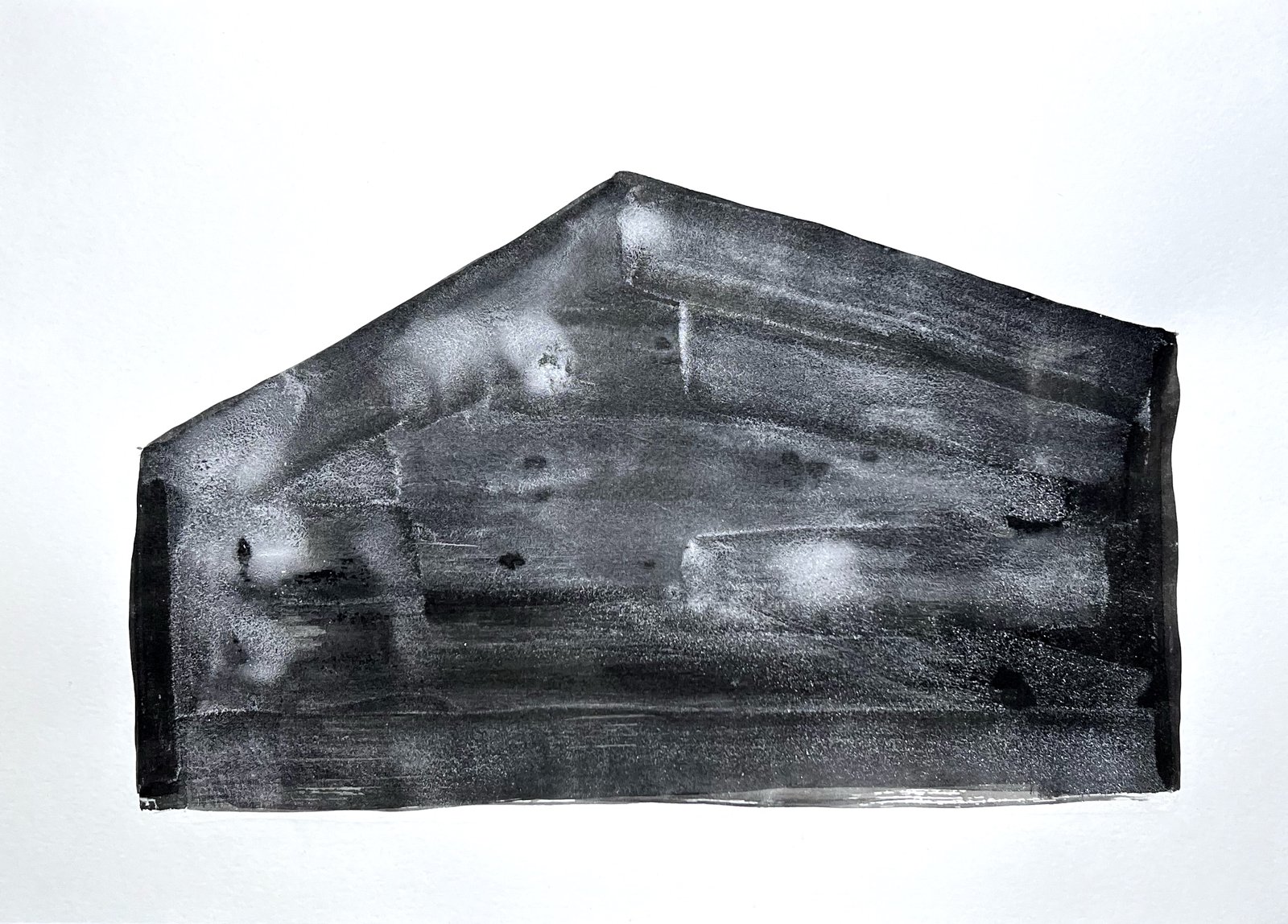
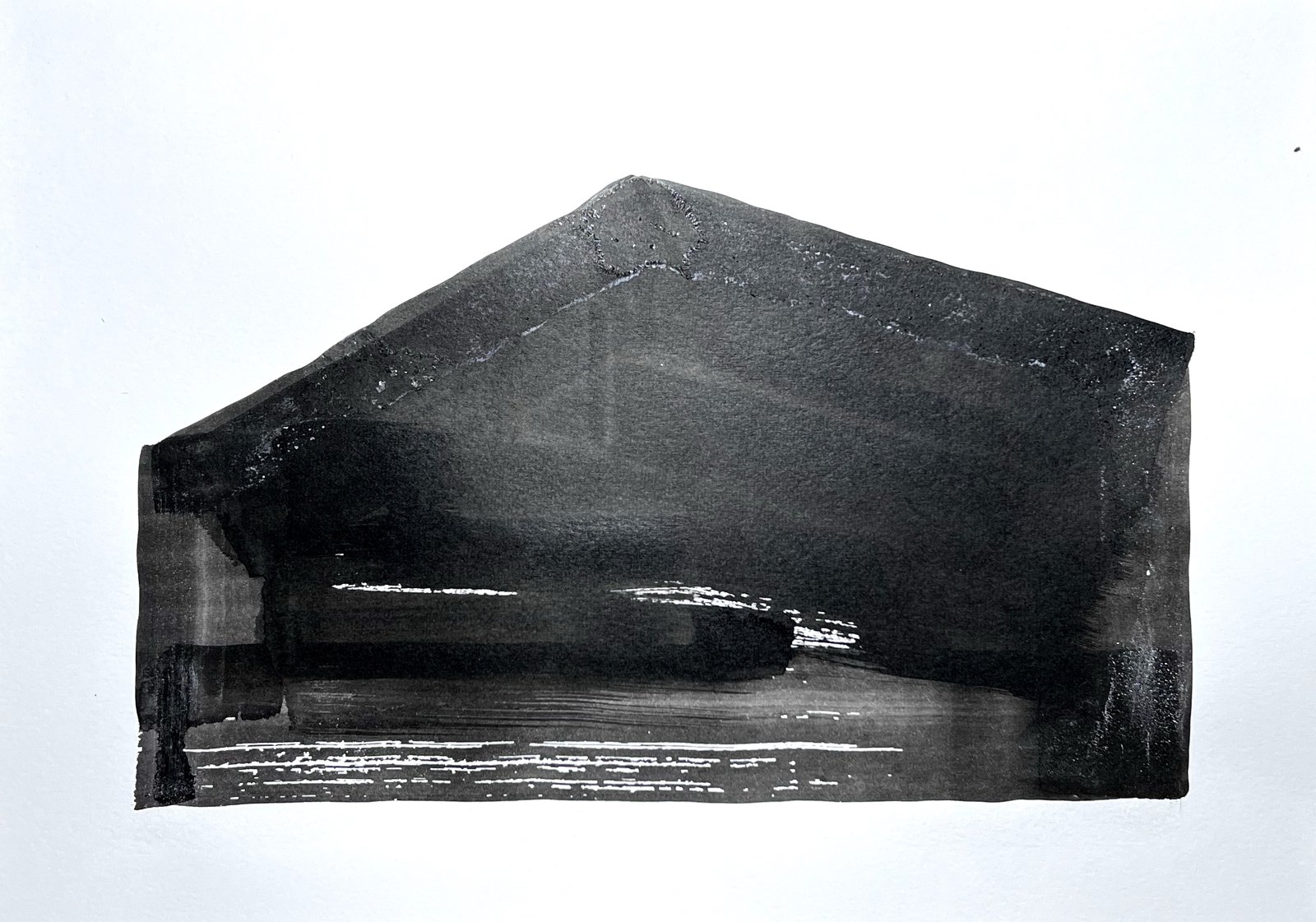
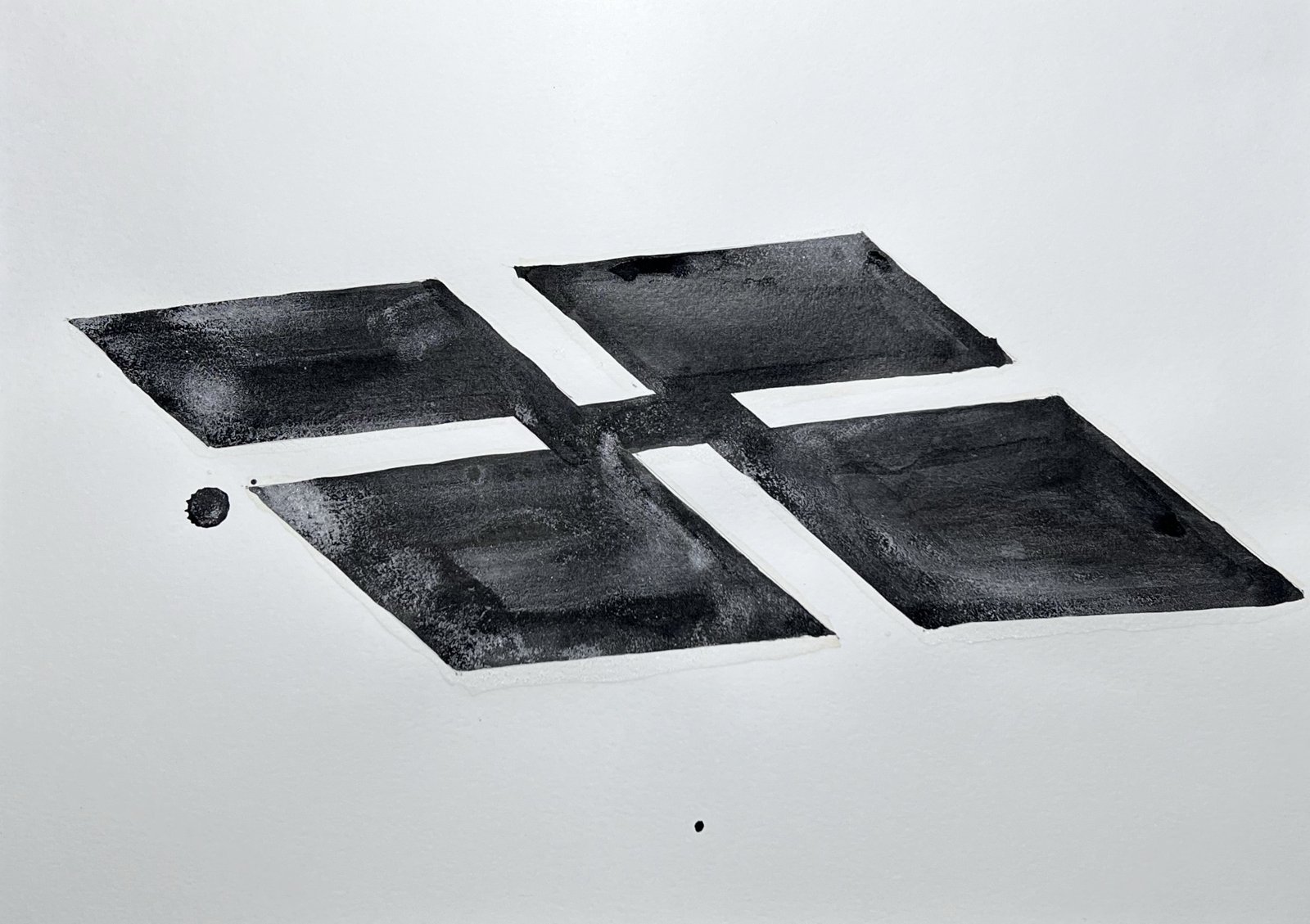
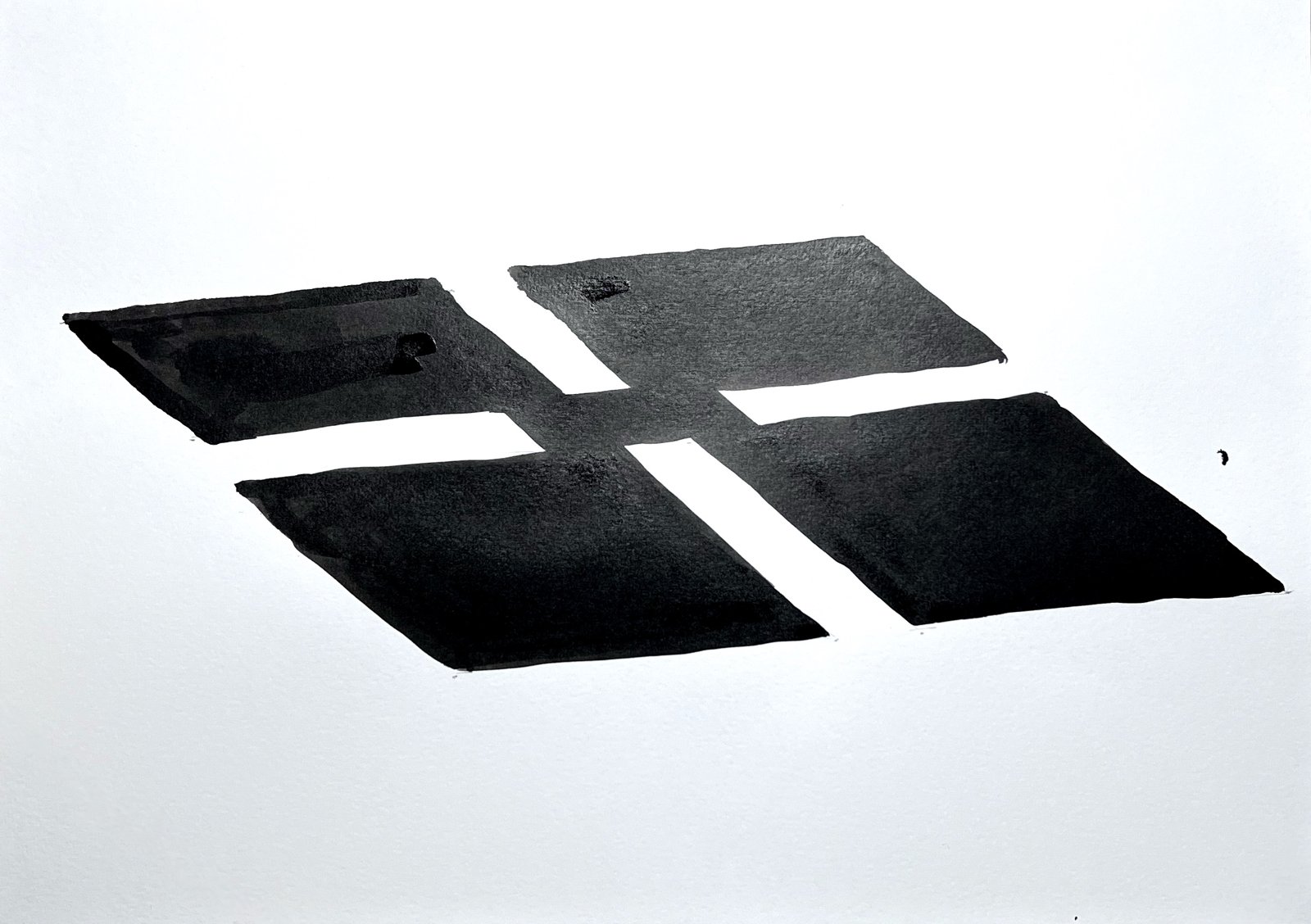
Drawings of data centres: the large, windowless buildings where AI runs, made to stand and work for decades. Each is drawn in acrylic ink, then coated in a solution of alum (potassium aluminium sulphate). As it dries, crystals grow across the surface and a yellow tidemark forms where the solution stopped. I decide where the solution goes, but not what it does there, and the paper may keep changing after the drawings are framed.
Alum has been used to size paper for centuries, and alum sizing is a major reason old books turn yellow and brittle. Here it sits on top of a building that is meant to last.
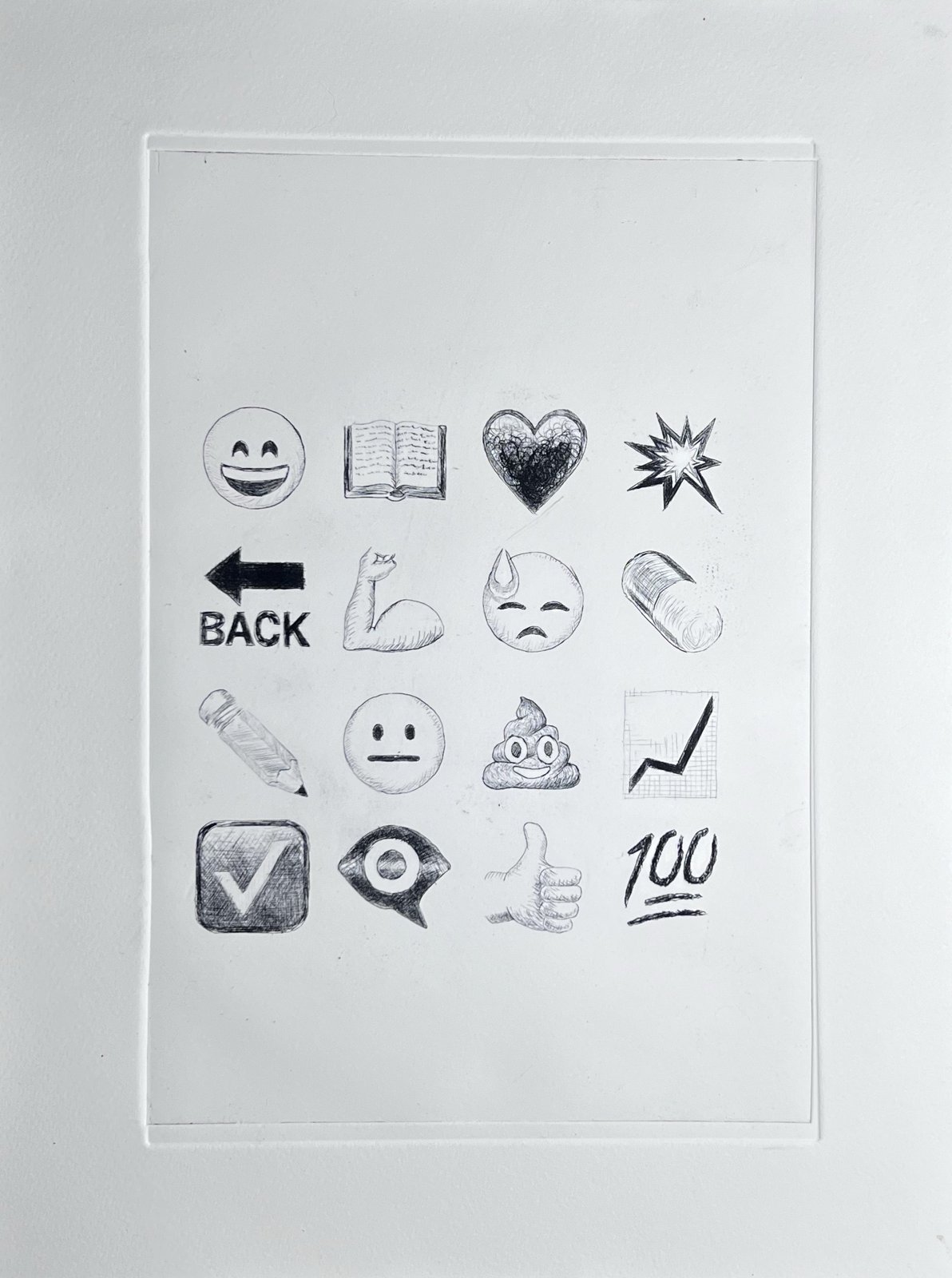
Emoji are made to be glanced at and scrolled past. Printmaking belongs to a culture of images made to last, and drypoint is slow and indirect: each of these was scratched by hand into a plate, in reverse, then inked and printed. Every print flattens a little of the ridge the needle threw up, so in the end making copies destroys the thing that makes them.
About
I'm a writer and artist in Ayrshire. I studied art at Central St Martins in London and Coventry School of Art, and have spent my career in the digital sector, working on content, marketing and transformation, and making books and art in the margins, where the important things usually happen. In 2026 I wrote Find the Fake, an art-forgery puzzle book.
I make drawings and prints about computing, but few of them are made on a computer. I use slow, indirect processes that act on the image instead of just carrying it. The emoji are scratched by hand into a plate, in reverse, and the plate wears a little with every print. The data centres are drawn in acrylic ink and coated in alum, which grows crystals and leaves a yellow tidemark as it dries.
Each subject sits on a material whose lifespan runs the other way. The emoji, the most disposable pictures we have, are printed in a medium built for permanence. The data centre, a building meant to run for decades, is drawn on paper that is already changing. I'm not arguing that AI will save us or ruin us. It might do both: I want the work to hold both readings at once, a monument and a ruin, and to leave people unsure which one they saw.
Elsewhere
- Find the FakeAn art-forgery puzzle book set in an Edinburgh auction house. 2,000 paintings, five cases, one forgery. Out now.
- Holdfast ProjectsMy writing and communications work, including pieces on data centres, energy and carbon.
- InstagramWork in progress.